Aug 26, 2026
How to Distinguish Quality of Chaozhou VS Dehua Ceramic Dinnerware
Ceramic Dinnerware Sets Ceramic Tableware Sets Ceramic Crockery Sets Stoneware Dinnerware Sets Stoneware Tableware Sets Stoneware Crockery Sets
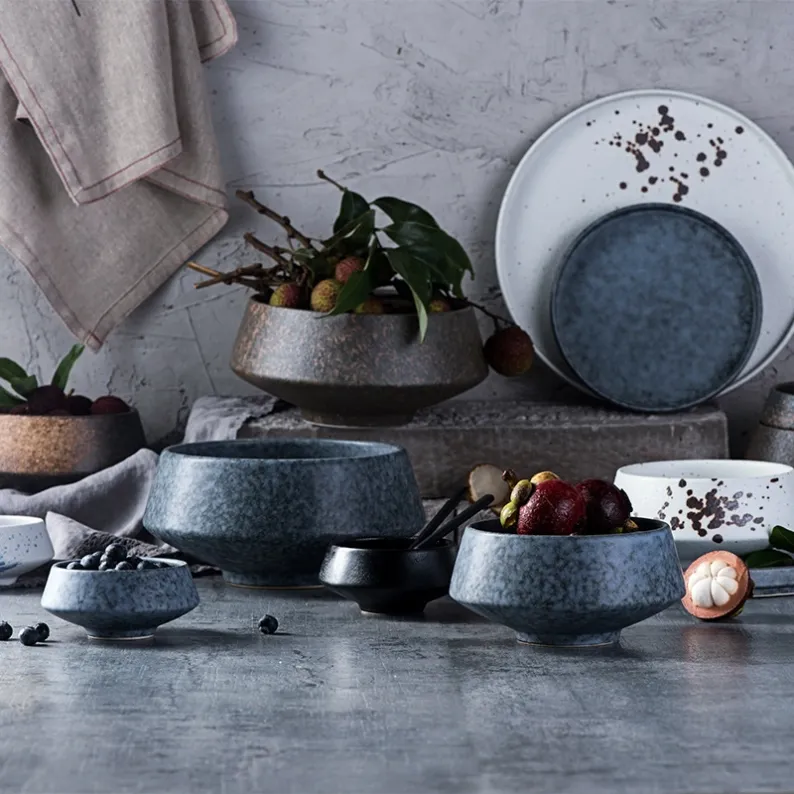
This guide is practical for inspection, buyer checking and quality comparison.
- Clay & Body (The biggest difference)
- Dehua Porcelain (High‑end common)
- Body material: High‑purity kaolin (famous Blanc‑de‑chine white clay)
- Color: Warm milky white / ivory‑white; very few grey or dark spots
- Translucency: Hold plate/mug up against bright light. Good Dehua porcelain is slightly translucent, light can shine through the thin wall.
- Weight: Medium‑heavy, dense solid body
- Texture when touching: Super‑smooth, fine‑grained, no grainy rough feeling
- Chaozhou Dinnerware
Most mass‑production items are stoneware / vitrified china / mid‑temp porcelain
- Color: Bright cold white, off‑white, sometimes slight grey tint
- Translucency: Almost not translucent under light (thick stoneware body)
- Weight: Can be lighter for thin‑wall mass goods; heavy for hotel‑grade thick stoneware
- Body density: Good Chaozhou vitrified ware is dense; low‑cost bulk items may have slightly porous raw body
*** Reminder: Chaozhou also makes high‑fire translucent porcelain; Dehua also makes cheap thick non‑translucent dinnerware. Do NOT judge origin only by translucency.
- Firing & Temperature
1) High‑quality Dehua dinnerware
High‑temperature firing (1280℃‑1320℃)
Advantages:
Fully vitrified body, low water absorption (<0.5%)
Chip‑resistant, dishwasher safe, long service life
Stain‑resistant, will not absorb coffee, sauce stains
- Chaozhou goods, two common grades
Premium Chaozhou vitrified ware: High‑fired, water‑absorption <0.5%, hotel quality, very durable
Budget mid‑temperature ware (1180‑1220℃): Higher water absorption. Risk of chipping, glaze crazing, stain‑absorption after long‑time use.
Simple quick test: Tap the edge of plate gently with your finger.
✅ Good quality: Clear, ringing, long echo sound
❌ Lower‑fired poor quality: Dull, flat “thud” sound, short echo
- Glaze Surface Check (Works for both areas)
Visual inspection rules for good quality:
No pinholes, tiny bubbles, black dots, scratches, dents on glaze
Glaze layer even, no uneven thick glaze, no dripping marks
Glossy items: Shine uniform, no matte cloudy patches
Matte glaze: Smooth, no grainy bumps
Bottom foot (unglazed base): Clean sanding, no sharp rough edges that scratch tables.
- Decal / Print Quality
Top grade: Pattern edges sharp, no blurred bleeding colours; no colour gaps. Decal fully covered by over‑glaze. Safe for dishwasher.
Low‑cost Chaozhou bulk: Sometimes thin decal, fuzzy edges, risk of pattern fading after repeated washing.
- Shape & Flatness
Put plates upside‑down on a flat table:
High‑quality ware lies flat, no wobble, no warped curved edge
Cheap mass‑production dinnerware (common in low‑end Chaozhou orders): Slight warping, plates rock when twisted.
- Food‑safe Compliance
Both Chaozhou & Dehua can pass LFGB, FDA, BPA‑free tests.
Quality difference is not from location, but factory control:
High‑end lines from both areas use lead‑cadmium‑free glazes & decals.
Budget bulk orders may skip strict lab testing. Always ask suppliers for test reports.
Buyer practical tips
Never label: “Dehua = good, Chaozhou = bad”. Both regions produce high‑quality and low‑quality goods. Origin is just a production base, not a quality guarantee.
Request sample first, do tap‑sound, light‑transparency, wobble test before bulk order.
Specify your technical requirement clearly: water absorption ≤0.5%, high‑fire vitrified, food‑safe test report. This will get you good quality products no matter Chaozhou or Dehua supplier.