Jul 20, 2026
What is the difference for ceramic / porcelain / stoneware / pottery / terracotta / pottery / bone china ?
Give short clarifications for ceramic / porcelain / stoneware / pottery / porcelain / terracotta ?
1. Core hierarchy (from broad to specific)
Ceramic = umbrella term (all clay-fired ware)
All the others (pottery, terracotta, porcelain, bone china) are subcategories of ceramic.
2. Breakdown each one
1) Ceramic
Definition: Any product made by shaping clay/mineral powder, then firing at high heat.
Covers everything: earthenware, stoneware, terracotta, porcelain, bone china, tiles, sanitary ware.
Material base: clay, silica, feldspar, kaolin, etc.
Example: ceramic mug, ceramic tile, ceramic vase.
2) Pottery /ˈpɒtəri/ (general low-fired clay ware)
Broad term for non-porcelain clay goods, split into two main types:
A. Earthenware (most common pottery)
Firing temp: low ~800–1100°C
Texture: porous, thick, opaque, matte unless glazed
Absorbs water if unglazed
Subtype: Terracotta
Terracotta /ˌterəˈkɒtə/ (a type of earthenware pottery)
Raw material: red/brown iron-rich clay
Firing: low temperature, unglazed most of the time
Color: natural rusty orange-red
Feature: very porous, heavy, rustic
Uses: flower pots, garden statues, roof tiles, ancient clay figurines (Terracotta Army)
B. Stoneware (higher-grade pottery)
Firing ~1200°C
Non-porous without glaze, durable, mid-weight
Daily bowls, baking dishes, rustic tableware
3) Porcelain (fine hard white ware)
Raw material: high-purity kaolin clay + feldspar
Firing temp: high ~1250–1450°C
Key traits:
Thin, white, translucent (hold up to light, light shines through)
Hard, smooth, fully vitrified (zero water absorption)
Crisp ringing sound when tapped
Two categories: hard-paste porcelain (standard porcelain) & soft-paste porcelain
Uses: dinner sets, vases, decorative chinaware
4) Bone China /bəʊn ˈtʃaɪnə/ (premium type of porcelain)
Formula: standard porcelain clay + 25–50% calcined animal bone ash
Firing: slightly lower than hard porcelain
Unique advantages over regular porcelain:
Extra translucent, milky warm white tone (not stark cold white)
Lighter weight, thinner body
More delicate, glossy glaze
Soft musical ring when tapped
Highest-end tableware, luxury tea sets, collectibles
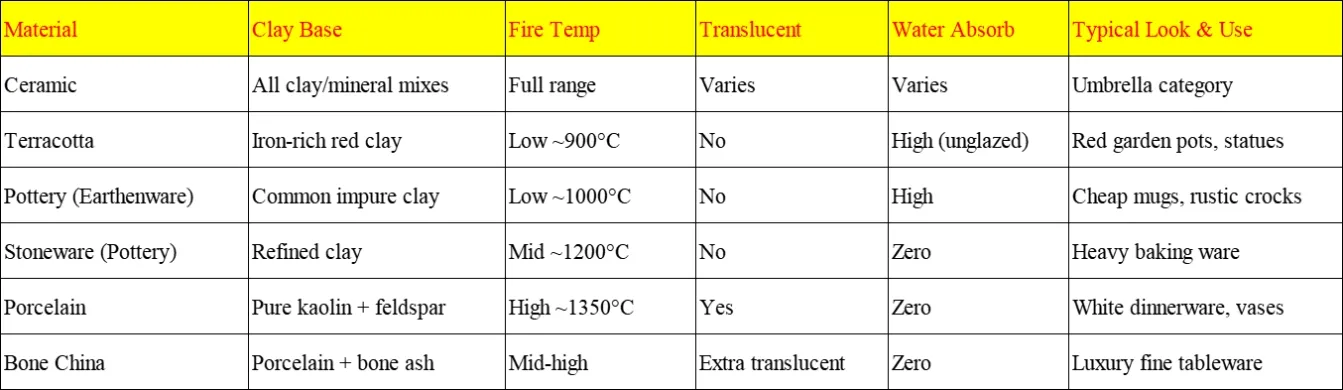
Quick comparison table
Simple memory rules
All terracotta, pottery, porcelain, bone china = ceramic
Terracotta = cheap red unglazed garden clay pot
Pottery = thick, opaque everyday clayware (not fine white)
Porcelain = white, thin, translucent hard fine ware
Bone china = premium porcelain mixed with bone ash, lighter & more translucent than regular porcelain